
“You don’t have to be great to start, but you have to start to be great.” Zig Ziglar’s quote highlights the need to begin a healthier lifestyle. Starting a weight loss journey can seem overwhelming. But, a well-planned eating plan makes it achievable.
Start your weight loss with a 7-day weight loss meal plan that’s easy and science-approved. This healthy eating plan aims to keep you full and energized while cutting calories. It focuses on high protein and fiber, and balances calories all day. This weight loss meal prep will help you succeed.
Key Takeaways
- A simple and effective way to kickstart your weight loss journey.
- A healthy eating plan that is backed by science.
- Focus on high protein, high fiber foods to stay satisfied.
- Balancing calories throughout the day for optimal weight loss.
- A well-structured meal prep to make healthy eating easier.
The Science Behind Effective Weight Loss
To lose weight successfully, it’s key to understand the science behind it. An effective weight loss plan isn’t just about cutting calories or following a diet. It’s about knowing how the body reacts to different foods and activities.
Caloric Deficit: The Foundation of Weight Loss
A caloric deficit is key to losing weight. This means eating fewer calories than your body burns. This makes your body use fat for energy. You can achieve this by eating less and moving more, fitting the low-calorie diet concept.
Metabolism and Weight Management
Metabolism is vital for managing weight. It’s how fast your body burns calories to keep you alive. A faster metabolism helps you lose weight and keep it off. Things like age, gender, and genetics affect your metabolism.
Incorporating meal planning with foods that boost metabolism can help with weight loss.
Nutritional Principles of This Weight Loss Plan
A good weight loss meal plan is based on key nutritional principles. This 7-day meal plan focuses on foods rich in nutrients. It helps the body get the right building blocks for effective weight management.
Protein, Fiber, and Healthy Fats
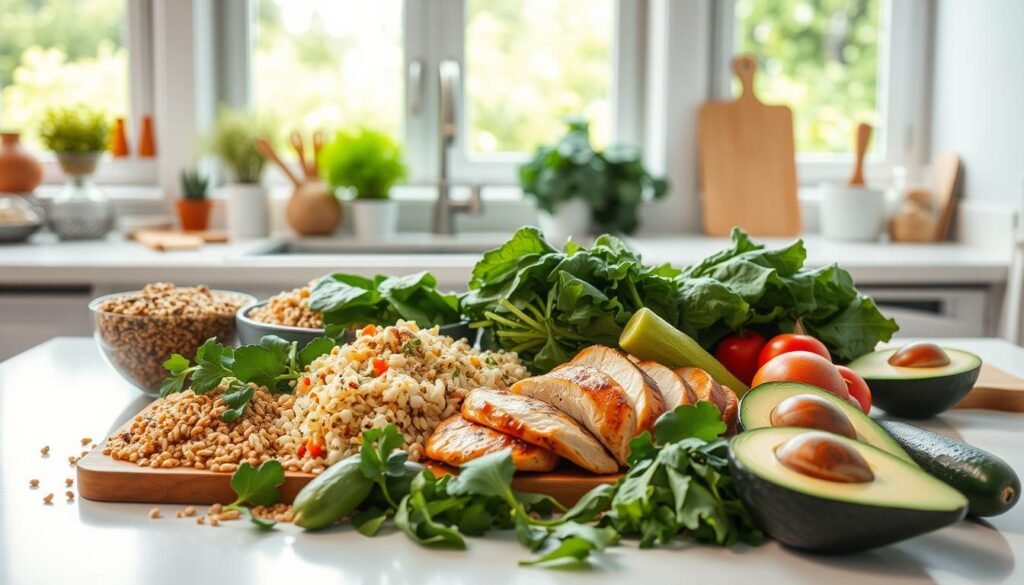
The meal plan highlights the value of high protein, high fiber foods, and healthy fats. Protein is key for muscle repair. Fiber aids digestion and keeps you full. Healthy fats, like those in nuts and avocados, are vital for hormone production and health. For more on balanced meals, check out a healthy eating plan example.
Portion Control Guidelines
Controlling portions is key for a caloric deficit, which aids in weight loss. The meal plan offers tips on portion sizes. This helps you avoid overeating and keep your diet balanced.
Hydration and Its Impact on Weight Loss
Drinking enough water is crucial for weight loss. Water reduces hunger, boosts metabolism, and supports health. The meal plan suggests drinking lots of water to stay hydrated and aid your weight loss.
How to Prepare for Your 7-Day Meal Plan for Weight Loss
To get the most from your 7-day weight loss meal plan, preparation is key. Having the right tools and strategies can greatly impact your weight loss journey.
Kitchen Essentials and Meal Prep Containers
First, stock your kitchen with must-haves like a sharp chef’s knife, cutting boards, and meal prep containers. These tools will streamline meal prep and aid in portion control. Look for containers that are safe for the microwave and easy to clean.
Grocery Shopping Strategies
Good grocery shopping is vital for meal planning success. Create a list of ingredients for your 7-day meal plan and stick to it. Choose whole foods, lean proteins, and a variety of veggies.
Batch Cooking Basics
Batch cooking saves time and keeps your meal plan consistent. Begin with simple recipes like soups, grilled chicken, or roasted veggies. This method helps you stay on track with your weight loss meal prep goals.
Complete 7-Day Meal Plan Breakdown
Starting your weight loss journey with a 7-day meal plan can be very effective. This plan offers a balanced mix of nutrients. It helps you stay nourished while cutting down on calories.
Days 1-2: Breakfast, Lunch, Dinner, and Snacks
For Days 1 and 2, the meal plan includes:
- Breakfast: Greek yogurt with berries and almonds (300 calories, 20g protein)
- Lunch: Grilled chicken breast with quinoa and steamed vegetables (400 calories, 40g protein)
- Dinner: Baked salmon with sweet potato and green beans (500 calories, 35g protein)
- Snacks: Carrot sticks with hummus (100 calories, 5g protein) and an apple (95 calories, 0.3g protein)
This meal plan is not only delicious but also packed with protein, fiber, and healthy fats. It keeps you full and satisfied all day.
Days 3-4: Breakfast, Lunch, Dinner, and Snacks
On Days 3 and 4, you’ll enjoy:
- Breakfast: Overnight oats with banana and almond milk (350 calories, 15g protein)
- Lunch: Turkey and avocado wrap with mixed greens (450 calories, 25g protein)
- Dinner: Grilled turkey breast with roasted vegetables and brown rice (550 calories, 40g protein)
- Snacks: Cottage cheese with cucumber slices (150 calories, 20g protein) and a handful of almonds (160 calories, 6g protein)
These meals are low in calories but high in nutrients. They support your weight loss goals.
Days 5-7: Breakfast, Lunch, Dinner, and Snacks
For the final days, the meal plan includes:
- Breakfast: Smoothie bowl with protein powder, spinach, and almond milk topped with granola (400 calories, 30g protein)
- Lunch: Chicken Caesar salad (400 calories, 35g protein)
- Dinner: Grilled shrimp with quinoa and steamed asparagus (400 calories, 20g protein)
- Snacks: Hard-boiled egg (78 calories, 6g protein) and rice cakes with peanut butter (150 calories, 8g protein)
This 7-day weight loss meal plan is tailored to provide a balanced and satisfying diet. It makes it easier to stick to your weight loss goals.
Calorie and Macronutrient Breakdown
The meal plan is designed to provide a daily calorie intake of approximately 1500-1700 calories. It balances macronutrients:
- Protein: 120-150g
- Carbohydrates: 150-200g
- Fats: 40-50g
This breakdown supports a low-calorie diet concept. It ensures you get enough nutrients to keep your energy levels up.

Shopping List for Your Weight Loss Journey
Starting a weight loss journey needs careful planning. It begins with a well-structured shopping list. We’ve made a list of essentials to help you start your weight loss meal prep.
Proteins, Fruits, and Vegetables
For a successful beginner’s meal plan, choose lean proteins like chicken breast, turkey, and fish. Add fruits like berries, citrus fruits, and apples. Also, include vegetables like leafy greens, broccoli, and bell peppers.
Grains, Dairy, and Pantry Staples
Whole grains like brown rice, quinoa, and whole wheat bread are key for a balanced diet. Include dairy products like Greek yogurt, milk, and cottage cheese. Pantry staples like olive oil, nuts, and seeds are also important for meal planning.
Healthy Snacks and Seasonings
For healthy snacking, add nuts, seeds, fruits, and carrot sticks with hummus to your list. Use herbs and spices like turmeric, basil, and cumin. They add flavor and help with weight loss.
Following this shopping list will help you on your weight loss journey. You’ll have a well-planned weight loss meal prep.
Tips for Success and Meal Plan Modifications
A good meal plan is just the start. Staying motivated and flexible is key. To get the most from your effective weight loss plan, follow these tips.
Dietary Restrictions and Alternatives
Modifying your meal plan for dietary needs is easy. Vegetarians can swap out chicken or fish for tofu or tempeh. Those with gluten intolerance can choose gluten-free grains. The goal is to keep the balance of protein, fiber, and healthy fats as in the original plan.
Staying Motivated Throughout the Week
Keeping motivated is vital for your healthy eating plan. Tracking your progress can be a big motivator. Sharing your goals with friends or family can also help you stay on track.
Incorporating Physical Activity
Adding physical activity to your routine boosts weight loss. Even a short walk daily can help. Find activities you like and can keep up with long-term to make your low-calorie diet concept work better.

Common Mistakes to Avoid When Following a Weight Loss Meal Plan
Starting a weight loss journey means knowing the common obstacles. A good meal plan is key, but avoiding mistakes is just as important.
Unrealistic Expectations and Portion Errors
Having unrealistic expectations about losing weight is a big mistake. It’s better to set goals you can reach. Also, portion errors can really slow you down. Using measuring cups or a food scale helps get the right amount.
- Be realistic about your weight loss goals.
- Measure your food portions accurately.
- Avoid eating large or late meals.
Skipping Meals and Inadequate Hydration
Skipping meals can cause nutrient gaps and slow your metabolism. Not drinking enough water can also slow you down and make you hungrier. Drinking water is key for health and controlling hunger.
- Stay hydrated by drinking plenty of water throughout the day.
- Eat regular, balanced meals to maintain your metabolism.
- Avoid sugary drinks that can hinder weight loss.
Knowing these common mistakes and how to avoid them can make your weight loss plan work better. This way, you can reach your goals more easily.
Conclusion
Following a 7-day weight loss meal plan can start your journey to a healthier lifestyle. This plan is simple yet backed by science. It makes it easier to stick to and reach your goals.
A healthy eating plan is key for losing weight. The meal plan in the previous sections guides you on nutrition, portion control, and staying hydrated. It helps you make better diet choices.
By avoiding common mistakes and staying focused, you can get the most out of this 7-day meal plan. Understanding nutritional principles and meal prep strategies will help you reach your weight loss goals.
FAQ
What is the main principle behind the 7-day meal plan for weight loss?
The 7-day meal plan focuses on high protein and fiber foods. It also balances calories throughout the day. This helps promote healthy and sustainable weight loss.
How does a caloric deficit contribute to weight loss?
A caloric deficit is key for weight loss. It lets the body burn fat for energy. This leads to a decrease in body weight.
What is the importance of protein, fiber, and healthy fats in the meal plan?
Protein, fiber, and healthy fats are vital. They keep you full, support digestion, and give you lasting energy.
How can I prepare for the 7-day meal plan?
To get ready, stock up on kitchen essentials and meal prep containers. Also, plan your grocery shopping to have all the ingredients you need.
Can I modify the meal plan to suit my dietary restrictions?
Yes, you can adjust the meal plan to fit your dietary needs. For example, you can choose vegetarian or gluten-free options by swapping ingredients and adjusting portion sizes.
How can I stay motivated throughout the week?
To stay motivated, track your progress and set achievable goals. Also, make sure to include physical activity in your daily routine.
What are some common mistakes to avoid when following a weight loss meal plan?
Avoid unrealistic expectations, skipping meals, and not drinking enough water. These can slow down your weight loss and harm your health.
How does hydration impact weight loss?
Hydration is crucial for weight loss. It boosts metabolism, reduces hunger, and supports your body’s functions.
Can I follow this meal plan for more than 7 days?
The meal plan is designed for 7 days. But you can extend it by making adjustments to keep it balanced and suited to your needs.
Is it necessary to incorporate physical activity into my daily routine?
Yes, physical activity is vital for your health. It increases calorie burn and boosts metabolism, helping with weight loss.